
The Story of Leven Is Strijd
Our History
Leven Is Strijd was built in the Netherlands in 1928 for Dirk Mudder, a member of a Dutch barging family. Constructed at Woubrugge, she was originally a 70–80 tonne cargo barge, designed to carry grain between the major Dutch ports and the smaller flour mills served by the country’s extensive network of canals and waterways.
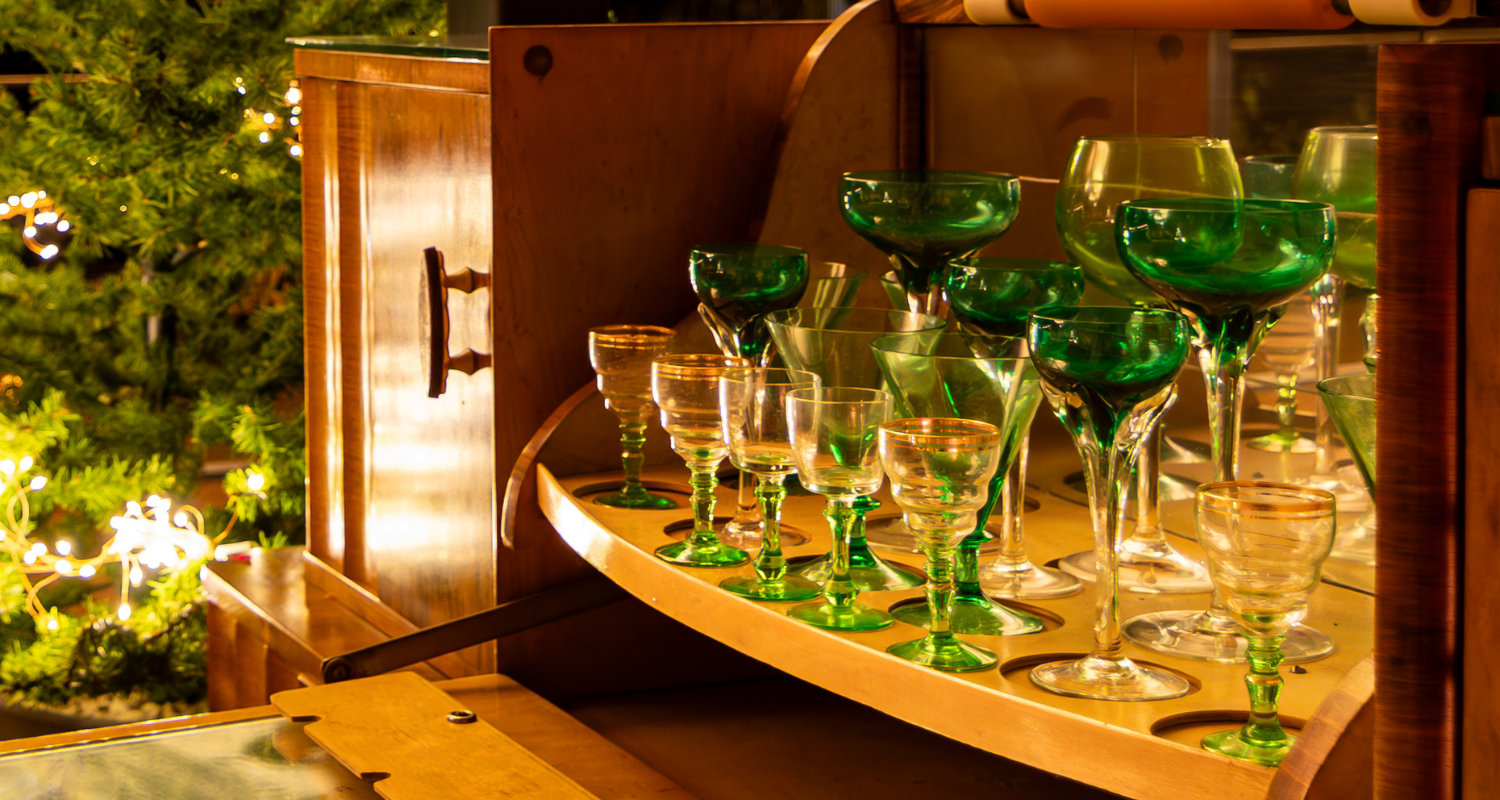
Like many Dutch barges of the period, she was both a working vessel and a family home. Her aft accommodation was fitted to a notably high standard, with oak cabinetry, etched-glass sliding doors and a stove for heating and cooking. She was also equipped with a bow rudder, allowing her to navigate backwards along narrow waterways and manoeuvre into confined berths.
The Mudder family continued to operate Leven Is Strijd throughout the Second World War. A German wartime identification number was stamped into her hull and traces of it can still be found beneath the paintwork.

A larger working barge
By the 1950s, larger barges were becoming more economical to operate. In an unusual piece of shipbuilding, Leven Is Strijd was lengthened using a section taken from one of her sister vessels, which had been built to the same dimensions.
The additional section was carefully incorporated into the hull, with the plating riveted to match the original construction. At the same time she was re-engined with a Volvo Penta diesel engine.
The transformation increased her length to around 95 feet and her carrying capacity to approximately 125 tonnes. She returned to commercial service and continued carrying grain until the late 1960s.
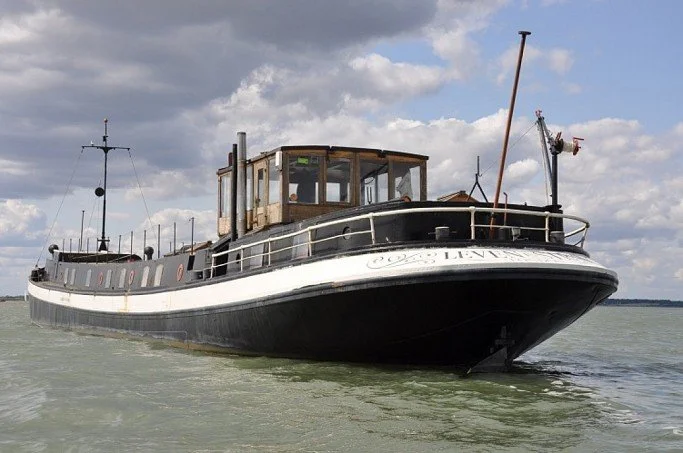
From cargo vessel to home
Following the retirement of the Mudder family from the vessel, Leven Is Strijd was sold and eventually brought to Britain, where she began a second life as a houseboat.
Her conversion included a substantial steel superstructure over the former cargo hold and alterations allowing the original wheelhouse and aft accommodation to connect directly with the newly created interior.
These changes laid the foundations for the barge we see today.
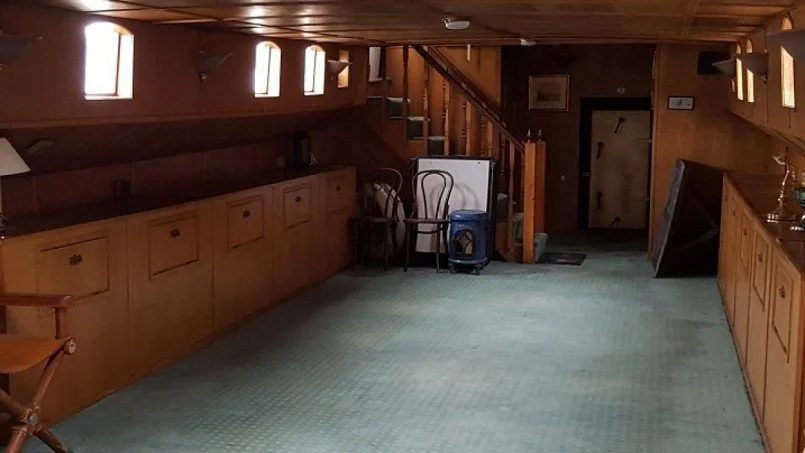
A new life in London Docklands
In the 1980s, Leven Is Strijd began perhaps the most unusual chapter in her history.
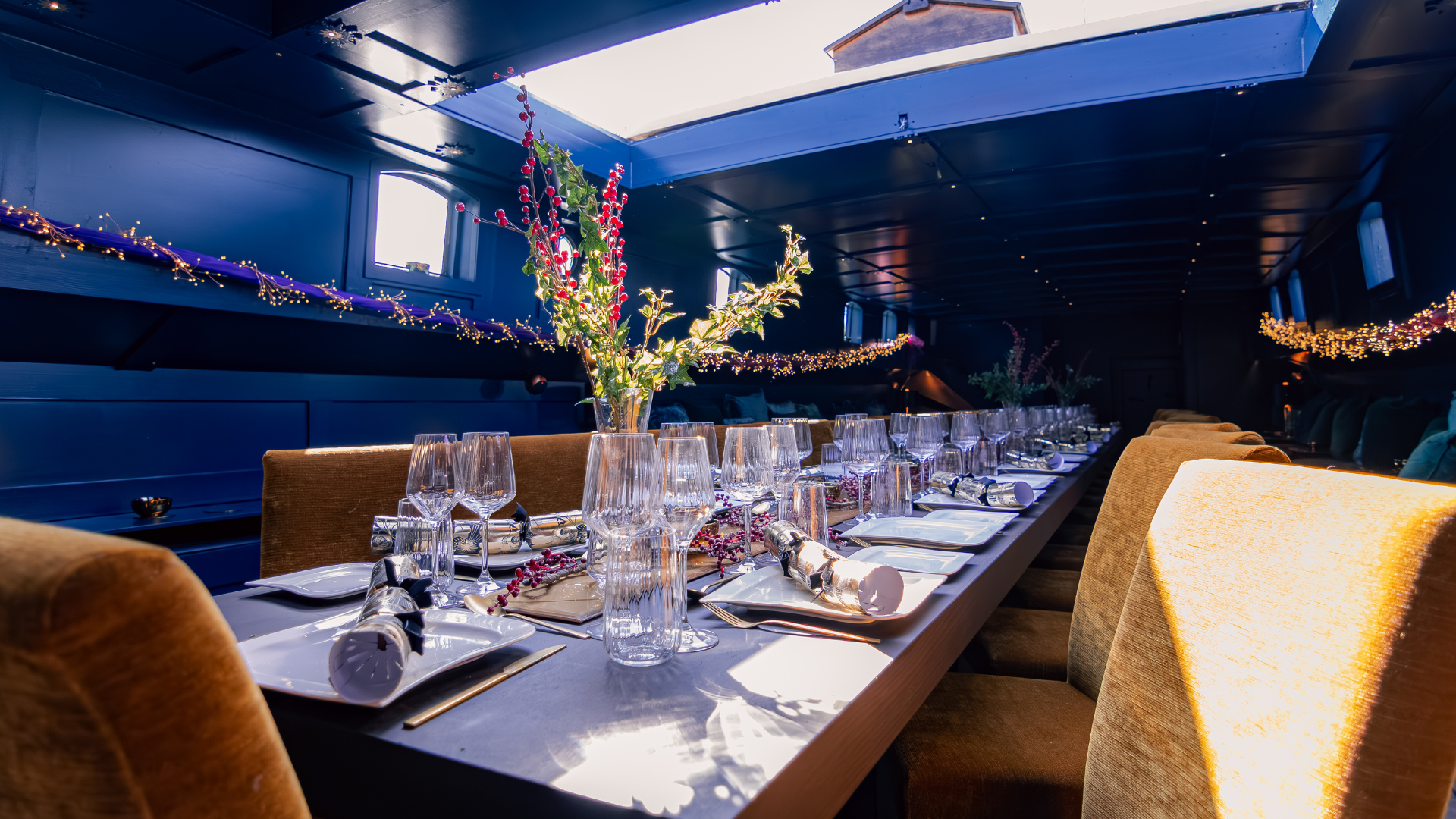
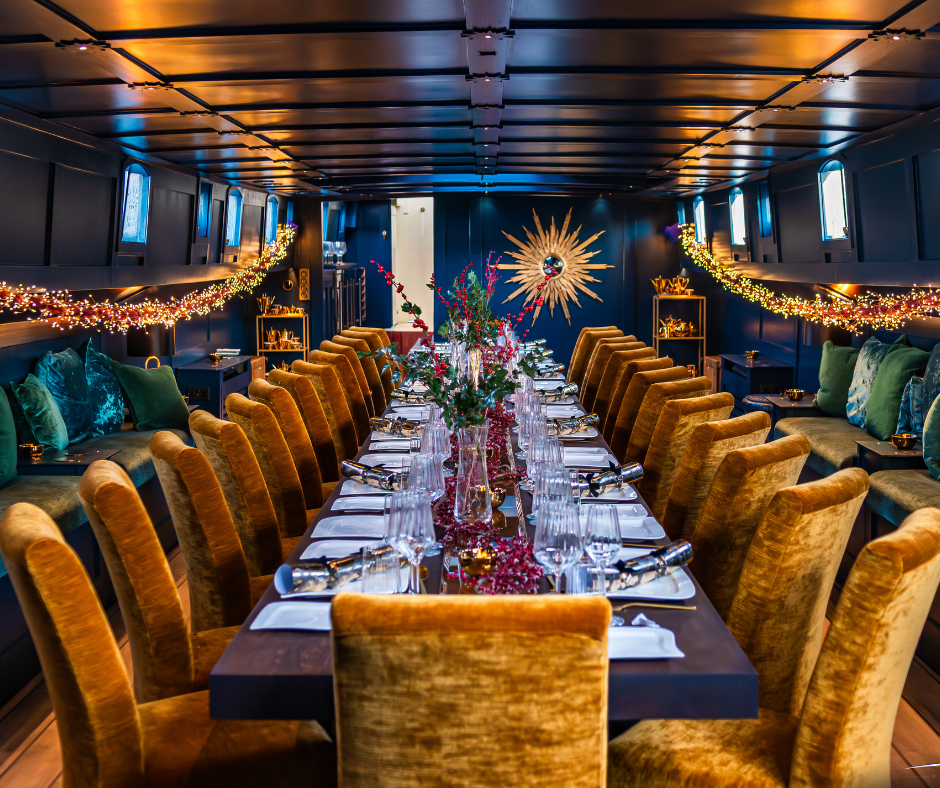
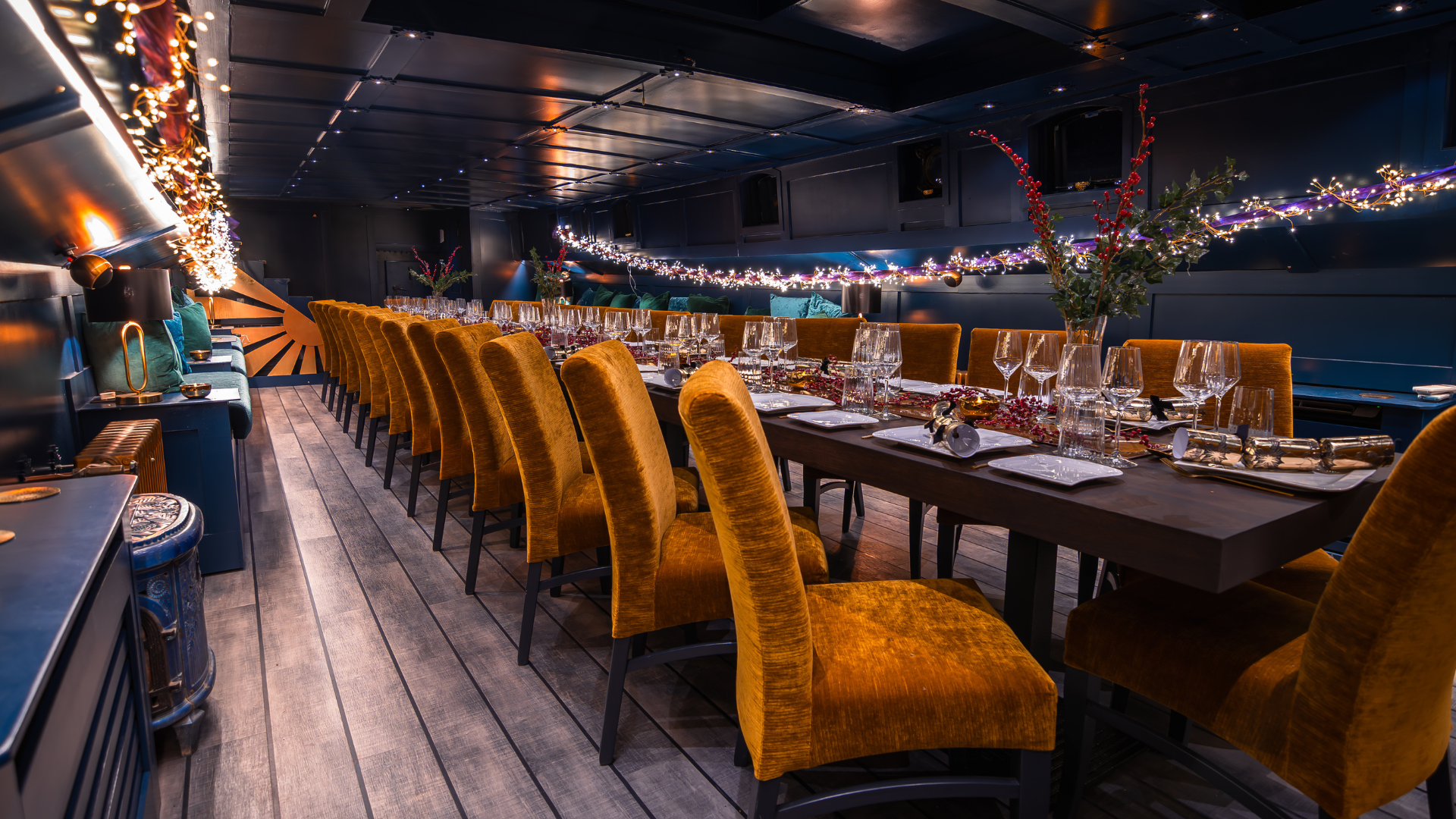
Moored beside Limehouse Television Studios at the emerging Canary Wharf development, she was converted into a private dining and hospitality venue. Her former cargo hold became an elegant dining space used by television companies, businesses and organisations involved in the transformation of London Docklands.
During this period Canary Wharf was changing from a landscape of docks and industrial land into one of Europe’s most important commercial districts. Leven Is Strijd found herself at the centre of that transformation.
She hosted corporate dinners, private celebrations and events connected with the rapidly developing Docklands area. Television production was also flourishing nearby, and the barge became associated with the community surrounding Limehouse Studios during an era that included programmes such as Spitting Image and major music and television productions.
As development progressed, she moved between several Docklands berths, including Millwall Inner Dock and later West India Quay.
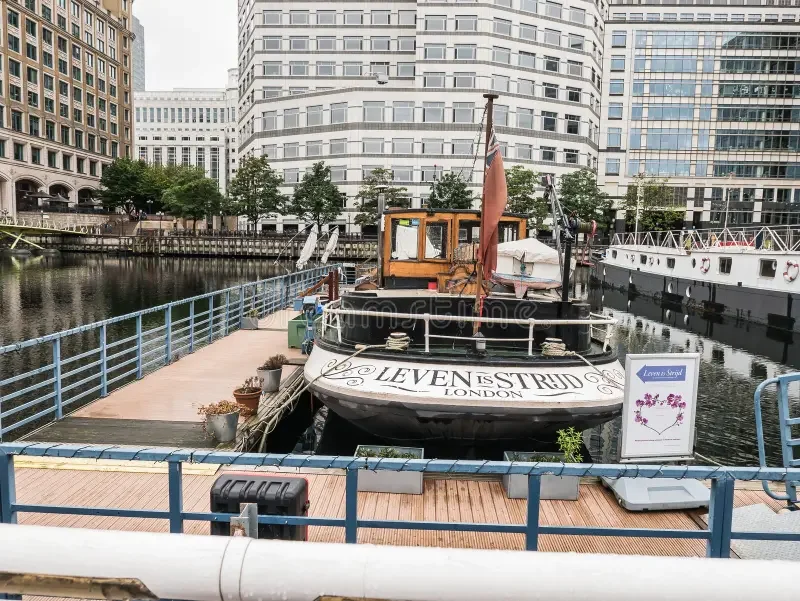
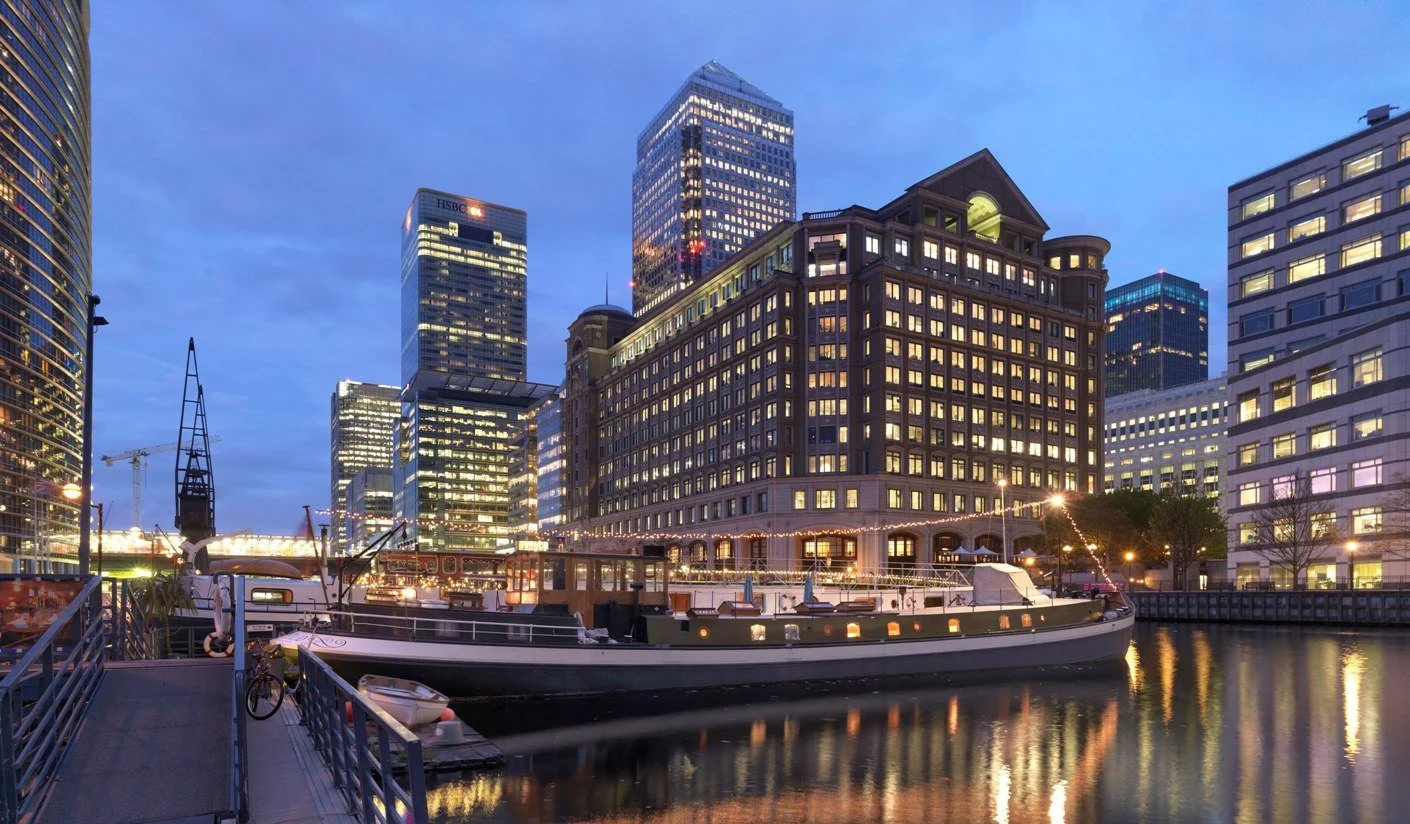
The South Quay bombing
One of the most dramatic events in the barge’s history came on 9 February 1996, when an IRA bomb exploded at South Quay in London Docklands.
Leven Is Strijd was moored only around 50 metres from the explosion.
Although surrounding buildings suffered devastating damage, much of the barge lay below the level of the dock wall, which helped shield her from the main force of the blast. Windows were shattered and the wheelhouse was displaced, but the hull remained afloat.
She was subsequently repaired and relocated to West India Quay, returning to service within weeks.

Crossrail and another change of ownership
For approximately another decade, Leven Is Strijd continued to operate as a private dining and events venue at Canary Wharf, hosting businesses, government organisations and visitors to the developing Docklands district.
Her future changed again when construction of Crossrail required major works in the docks. Plans to drain and temporarily alter the dock environment threatened the vessels moored at West India Quay.
Following lengthy negotiations connected with the Crossrail legislation, arrangements were made to protect the barge during the works. She was eventually acquired by the organisation responsible for the project and later passed into the ownership of Transport for London.
A new beginning on the Medway
In late 2019, Sam and Paul Holland saw Leven Is Strijd advertised for sale and recognised the opportunity to give the barge a new future.
A formal offer was made to Transport for London in the spring of 2020 — just as the Covid pandemic brought much of the country to a standstill. Fortunately, TfL were patient, and all parties agreed to wait and see how events developed before completing the sale.
In late May 2021, broker Peter Coupland delivered Leven Is Strijd from her long-term home at St Osyth in Essex to Twinney Wharf on the River Medway.
It was only then that the true scale of the project became apparent.
The original intention had been to give the barge a relatively straightforward refresh. Years without regular private ownership, however, had taken their toll, and the project quickly developed into a complete strip-out and refit.
Structural steelwork was also required, taking Leven Is Strijd to the dry dock at Chatham Docks. What had been expected to be a short visit became a much longer stay, but once the hull work was completed she returned to Twinney Wharf for the extensive internal fit-out.
The final part of the restoration was the aft cabin — and here a different decision was made.
Rather than modernise it, the original 1928 saloon was retained. Almost a century after the barge was built, it remains the only part of Leven Is Strijd substantially unchanged from her original construction, complete with its ornate glass-infilled doors and traditional joinery.
Today, Leven Is Strijd has been given another lease of life on the River Medway.
Nearly a century after she first entered the Dutch waterways, her story continues — from working grain barge to houseboat, Docklands dining venue, survivor of the South Quay bombing and, once again, a place for people to gather around a table.
